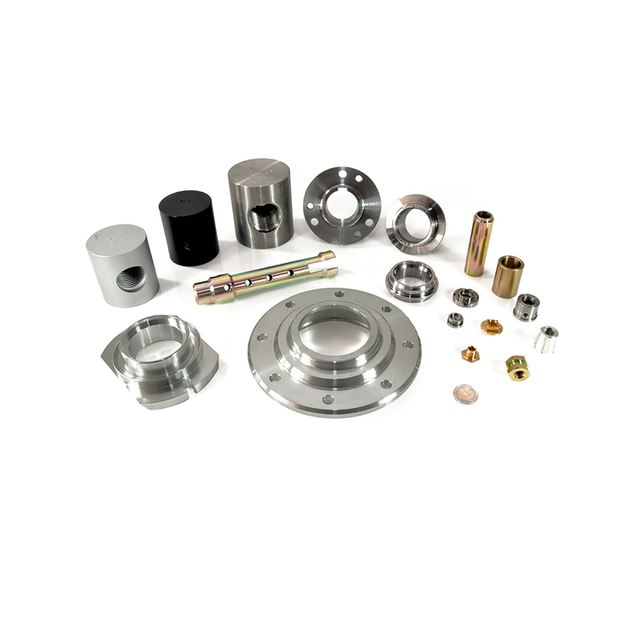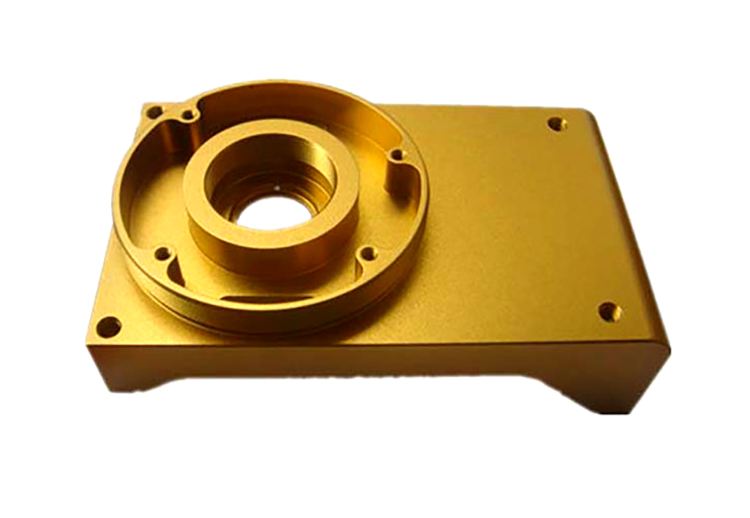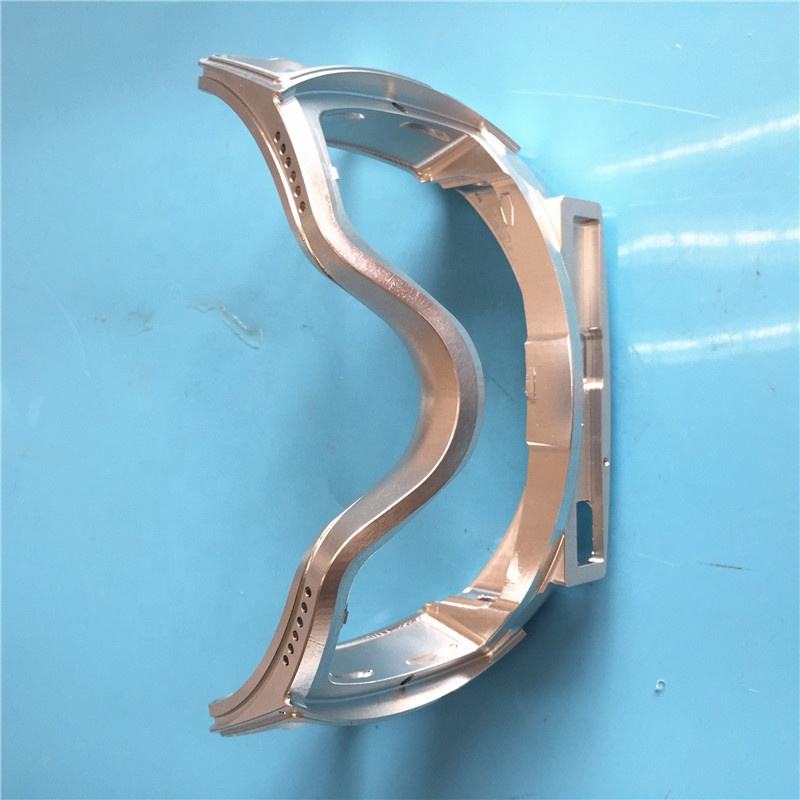
CNC machining of large, thin-walled aluminum components presents one of the most significant challenges in precision manufacturing. These parts, essential in aerospace, robotics, and semiconductor equipment, are highly susceptible to distortion, making it difficult to hold tight flatness, geometric tolerances (like parallelism and perpendicularity), and dimensional tolerances simultaneously. Success hinges on a holistic strategy that addresses material physics, machining forces, and fixturing.
The core challenges are:
- Internal Stresses: Residual stress in the raw material stock relieves unevenly as material is removed, causing the part to warp.
- Machining-Induced Stresses: Cutting forces and heat generated during machining can introduce new stresses and cause thermal expansion/contraction.
- Fixturing Distortion: Improper clamping can bend the part, which then springs back to an out-of-tolerance state once released.
Here is a systematic approach to overcoming these challenges.
1. Foundational Strategy: Material Selection and Preparation
The process begins long before machining.
- Specify Stress-Relieved Tempers: Always choose a temper explicitly processed for dimensional stability. For aluminum 6061, 6061-T651/T6511 is vastly superior to standard T6. The stretching process (the “51”) plastically deforms the material to neutralize internal stresses.
- Pre-Machining Stress Relief (Optional but Recommended): For critical applications, consider having your machine shop pre-machine the raw material plate. They can take light, symmetric cuts from both sides to “skin” the stock, allowing it to stabilize before the final machining begins.
2. The Core of Success: Machining Methodology
This is where the battle for accuracy is won or lost. A simple “top-down” machining approach will inevitably fail.
- The Golden Rule: Strategic Roughing and Finishing
- Roughing: Remove the bulk of the material (leaving a uniform stock allowance, e.g., 1-2 mm) from one side of the part.
- Stress Relief: Unclamp the part. This is crucial. It allows the internal stresses to redistribute and the part to “move” into its new stressed state.
- Re-fixturing: Re-secure the part with minimal, even clamping force.
- Semi-Finishing: Machine the first side to near-final dimensions, leaving a small amount of stock (e.g., 0.2-0.5 mm) for the final pass.
- Flip and Repeat: Flip the part over. Repeat steps 1-4 on the second side. This symmetrical material removal balances the stress relief.
- Final Finishing: Take light, final passes on both sides to achieve the final dimensions and surface finish. Light cuts produce minimal heat and force.
- Climb Milling for Stability: Use climb milling (down milling) wherever possible. This technique pulls the workpiece into the cutter, resulting in a smoother cut, less tool deflection, and better surface finish, which contributes to dimensional accuracy.
- Controlling Heat:
- Use sharp, coated carbide tools designed for aluminum.
- Employ high-pressure coolant to dissipate heat effectively and evacuate chips quickly, preventing re-cutting and heat buildup.
3. Advanced Fixturing Techniques: Minimizing Distortion
The goal of fixturing is to hold the part securely without bending it.
- Vacuum Chucks: The ideal solution for large, flat parts. The holding force is distributed evenly over the entire surface, preventing the localized distortion caused by mechanical clamps. This is critical for maintaining flatness.
- Low-Viscosity Epoxy Fixturing: For extremely complex or delicate parts, the workpiece is bonded to a sacrificial substrate. This provides ultimate support for the entire geometry. After machining, the part is released by heating to soften the epoxy.
- Custom Modular Fixturing: Designing fixtures with strategic support points that match the part’s geometry helps to prevent deflection under cutting forces.
4. Design for Manufacturability (DFM): Engineering for Success
Close collaboration between the designer and the machinist is vital.
- Avoid Unnecessary Thin Walls: Specify the thickest sections possible. If weight is a concern, use ribbed structures instead of uniformly thin walls for added stiffness.
- Define Realistic Tolerances: Apply tight tolerances only to critical features. A note like “ALL OVER ±0.5 mm” with specific callouts for critical features (e.g., ±0.05 mm) is more economical and achievable than tightening every dimension.
- Specify Datum Features Wisely: Clearly define functional datums (A, B, C) on the drawing. The machinist will use these datums to establish the coordinate system, ensuring that geometric tolerances (like parallelism to Datum A) are measured correctly.
5. Post-Machining Considerations
- In-Process Verification: Use touch probes on the CNC machine or a portable CMM to check critical dimensions before the part is fully unclamped. This allows for minor adjustments in the same setup.
- Controlled Release: After the final cut, release clamping forces gradually. For the most critical parts, a final stress relief (heat treatment) may be performed before the very last, ultra-light finishing pass.
Conclusion
Achieving high flatness, geometric, and dimensional accuracy on large, thin aluminum parts is not a single action but a disciplined process. It requires:
- Starting with stable material (T651).
- Employing a multi-stage machining strategy that allows for stress relief.
- Using advanced fixturing (like vacuum chucks) to minimize distortion.
- Applying smart DFM principles.
By understanding and controlling the interaction between material stresses and machining forces, manufacturers can consistently machining high-precision, large-format thin parts that meet the most demanding specifications.