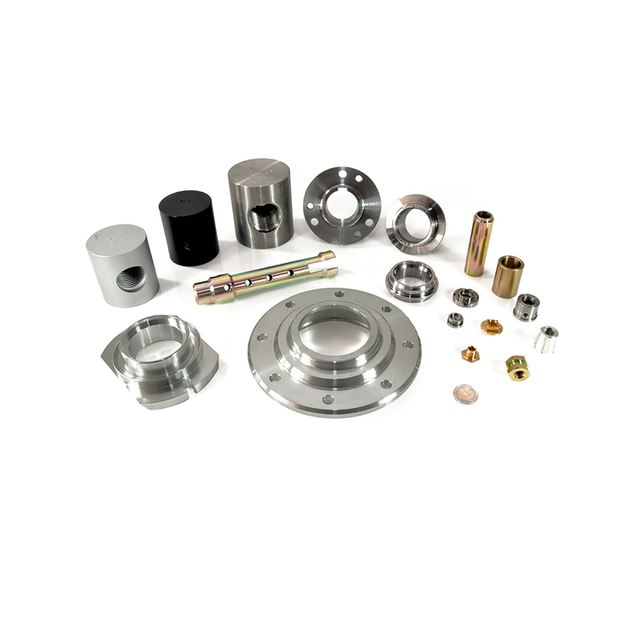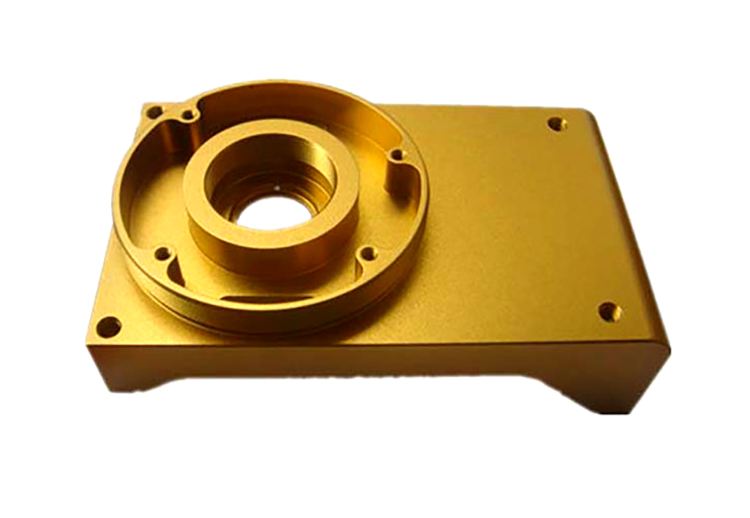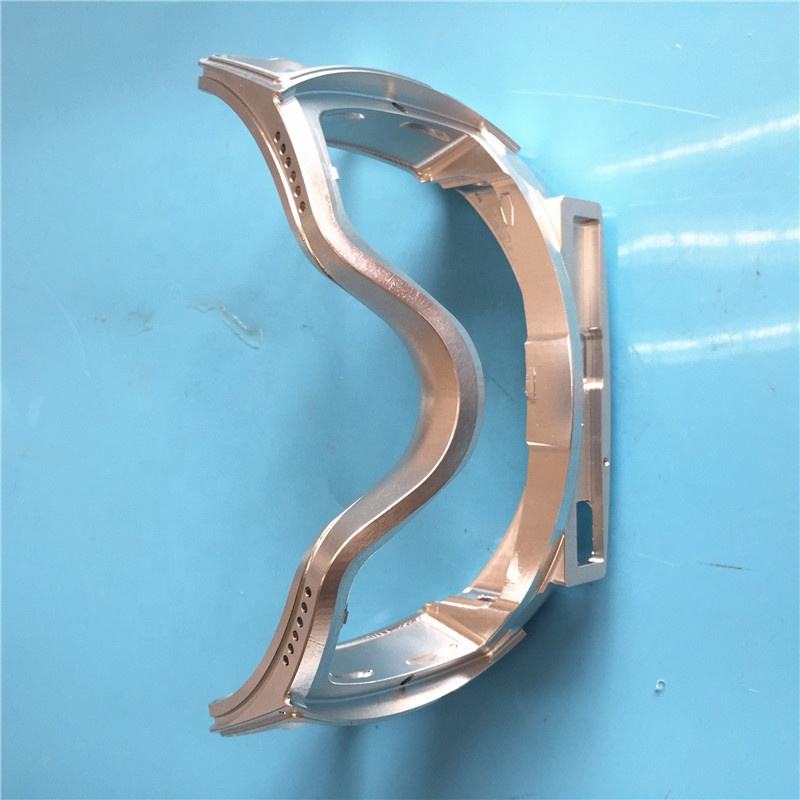
Aluminum 6063 is a popular alloy in CNC machining, known for its good extrudability and moderate strength. However, its surface often requires treatment for corrosion resistance, aesthetics, and specific functional properties like electrical insulation. Here’s a comparative analysis of three common surface finishes.
1. Electrophoretic Coating (E-Coat)
- Process: The part is immersed in a water-based paint bath. An electric current is applied, causing the paint particles to migrate and deposit evenly onto the electrically conductive substrate (the aluminum part).
- Insulation Performance:
- Excellent. E-coat creates a very uniform, continuous, and pinhole-free polymer film that acts as a highly effective dielectric barrier.
- The coating is thin but very consistent, providing outstanding electrical insulation even on complex geometries with sharp edges and recessed areas that other methods might not cover as effectively.
- Result: High dielectric strength, excellent for preventing electrical short circuits.
- Dimensional Impact:
- Minimal. The coating thickness is typically very thin, ranging from 10 to 25 microns (0.0004″ to 0.001″).
- This low build-up has a negligible effect on the final dimensions of a precision CNC-machined part. It will not significantly change fit, thread engagement, or clearances.
- Result: Negligible impact on dimensional accuracy.
2. Powder Coating
- Process: A dry, electrostatically charged powder (typically epoxy, polyester, or polyurethane) is sprayed onto the grounded aluminum part. The part is then cured in an oven, where the powder melts and flows into a continuous solid film.
- Insulation Performance:
- Very Good to Excellent. Powder coating creates a thick, robust polymer layer that is an excellent electrical insulator.
- Its dielectric strength is very high. However, if the coating is applied too thinly or improperly, it can potentially have microscopic pinholes, which could be a point of failure under very high voltage.
- Result: Provides very high dielectric strength, suitable for most industrial electrical enclosures and components.
- Dimensional Impact:
- Significant. This is the thickest of the three coatings. Standard thickness ranges from 60 to 120 microns (0.0024″ to 0.0047″), and it can be even thicker.
- This substantial build-up must be accounted for in the CNC machining design phase. Features like threads, tight-tolerance holes, and sliding fits will be directly affected. Masking is often required to keep critical surfaces free of coating.
- Result: Significant impact on dimensions; design for manufacturability (DFM) is critical.
3. Hard Anodizing (Type III Anodizing)
- Process: An electrochemical process that converts the aluminum surface into a dense, durable aluminum oxide layer. This is not an applied coating but a transformed surface layer.
- Insulation Performance:
- Good, but with a major caveat. Aluminum oxide (Al₂O₃) is a very good ceramic insulator.
- However, the standard hard anodizing process creates a porous surface structure that is typically sealed with a hot water or nickel acetate seal. While the sealed layer is somewhat insulating, the overall dielectric strength is generally inferior to a high-quality E-coat or powder coat.
- More importantly, for anodizing to work, the part must conduct electricity to the bath. This means if the part requires selective anodizing, any jigging points (contact points) will remain conductive and un-anodized. For full insulation, the entire part must be anodized without conductive contact points in the final application.
- Result: Provides good surface insulation but is not as reliable as polymer coatings for critical high-voltage insulation. Not a monolithic barrier.
- Dimensional Impact:
- Moderate and Predictable. The anodized layer grows approximately 50% inward and 50% outward from the original surface. For a 50 micron (0.002″) thick coating, about 25 microns (0.001″) of the original material is converted, and the total part grows by ~25 microns (0.001″).
- This growth is highly predictable and uniform, allowing machinists to pre-machine the part to a slightly smaller size to compensate. It affects dimensions less than powder coating but more than E-coat.
- Result: A predictable and manageable change in dimensions that can be compensated for during CNC machining.
Summary Comparison Table
| Feature | Electrophoretic Coating (E-Coat) | Powder Coating | Hard Anodizing |
|---|---|---|---|
| Insulation Performance | Excellent. Uniform, pinhole-free, high dielectric strength. | Very Good to Excellent. Thick layer, high dielectric strength. | Good. Ceramic insulator, but porous and requires sealing. Less reliable than polymers. |
| Coating/Layer Thickness | 10 – 25 µm (Very Thin) | 60 – 120 µm (Thick) | 25 – 75 µm (Medium) |
| Impact on Dimensions | Negligible. Ideal for high-precision parts. | Significant. Requires DFM and masking. | Moderate & Predictable. Can be compensated for in machining. |
| Best Suited For | Precision electronic components, parts with complex geometries, applications where minimal size change is critical. | Electrical enclosures, consumer products, applications where a thick, robust, and decorative layer is needed. | Wear-resistant parts, military specs, applications needing a hard surface with moderate insulation and good heat dissipation. |
Conclusion for CNC Machining
- For maximum insulation with near-zero dimensional change, Electrophoretic Coating (E-Coat) is the superior choice.
- When a thick, robust, and highly insulating layer is needed and the part can be designed to accommodate the added thickness, Powder Coating is an excellent option.
- When the primary need is extreme surface hardness and wear resistance alongside moderate insulation, and the predictable dimensional growth can be machined into the part, Hard Anodizing is the preferred process.
Always consult with your CNC machining supplier and surface finishing vendor early in the design process to select the best treatment and apply the correct dimensional tolerances.