The dimensional accuracy of a CNC machined part is influenced by a complex interplay of factors from the machine, the tooling, the material, and the process itself.
1. Machine Tool Capability:
- Geometric Accuracy: The inherent precision of the machine’s axes (e.g., squareness, straightness).
- Stiffness and Vibration: A rigid machine minimizes chatter and deflection during cutting, which is critical for accuracy.
- Thermal Stability: Heat generated by motors and friction can cause the machine structure to expand minutely, leading to deviations. High-end machines have thermal compensation systems.
- Resolution and Feedback: The precision of the ball screws and the accuracy of the positional feedback encoders.
2. Tooling Factors:
- Tool Deflection: The cutting tool is like a spring; excessive cutting forces can cause it to bend, resulting in features that are undersized or off-location.
- Tool Wear: A worn tool changes geometry, generates more heat, and increases cutting forces, leading to inaccurate dimensions and poor surface finish.
- Tool Quality & Runout: Imperfectly balanced or poorly centered tools in the spindle can cause inconsistent cuts and size variation.
3. Process & Programming:
- Cutting Parameters: Incorrect speed (RPM), feed rate, and depth of cut can lead to overheating, high forces, and deflection.
- Tool Path Strategy: How the programmer approaches the cut (e.g., climb vs. conventional milling, stepover, finishing passes) is critical for achieving final dimensions.
- Fixturing: Improper workholding can allow the part to move during machining or be distorted by excessive clamping force.
4. Material Properties:
- Internal Stresses: Materials like certain plastics or annealed metals can have internal stresses that are released during machining, causing the part to warp or move.
- Heat Treatment: Variations in material hardness can affect how it responds to cutting.
- Thermal Expansion: The heat generated during machining causes the part to expand. If measured hot, it will be undersized when it cools to room temperature.
5. Metrology & Environment:
- Measurement Equipment: The accuracy and calibration of calipers, micrometers, and CMMs directly impact the verification of dimensions.
- Temperature: The standard measuring temperature is 20°C (68°F). A hot part or a shop floor that is too warm will lead to incorrect measurements.
Design Features That Are Difficult to Hold to Tight Tolerances
Certain design features are inherently challenging due to the physics of the cutting process and tool limitations.
1. Deep Pockets with Tight Tolerances:
- Reason: Requires long-reach tools, which are prone to significant deflection and vibration. It’s extremely difficult to maintain a straight wall and a flat floor over a large, deep area.
2. Thin Walls:
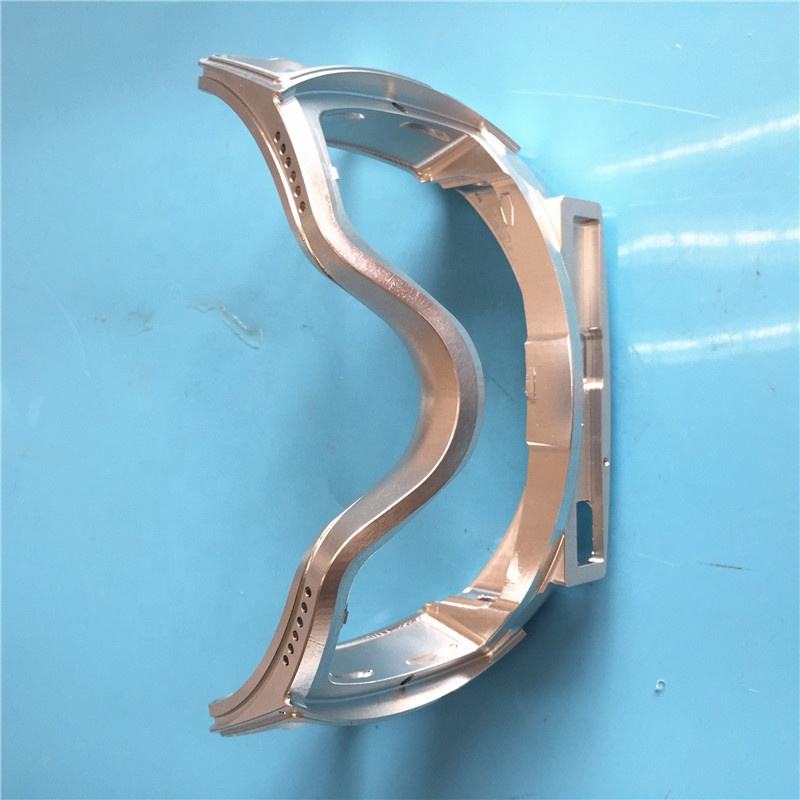
- Reason: The wall itself lacks rigidity and can deflect or vibrate (chatter) during machining. The heat from cutting can also cause it to expand or warp. It’s very easy to over-machine a thin wall, making it undersized.
3. Small Internal Radii (Sharp Internal Corners):
- Reason: The radius is determined by the cutting tool’s diameter. Creating a very small radius requires a very small, fragile tool that is prone to deflection and breakage, making it hard to hold size and position.
4. Non-Rigid Parts (Large, Slender, or Complex Shapes):
- Reason: Parts that lack inherent stiffness can flex or vibrate during machining. They can also be distorted by clamping forces and may warp after being released from the fixture.
5. Features on Multiple Sides (Requiring Re-Fixturing):
- Reason: Any time a part is moved and re-clamped, a new potential for error is introduced. The cumulative tolerance stack-up between datums on different sides can make it challenging to maintain true position between features.
6. Threads in Blind Holes:
- Reason: Achieving a full, clean thread to the bottom of a blind hole is difficult. The tap must be perfectly aligned, and chip evacuation becomes a major issue, potentially affecting thread size and quality.
In summary, achieving high dimensional accuracy is a systematic process of controlling the machine, tool, and environment, while designers must understand that certain geometries push the limits of the process and may require looser tolerances or a different manufacturing method in CNC machining.