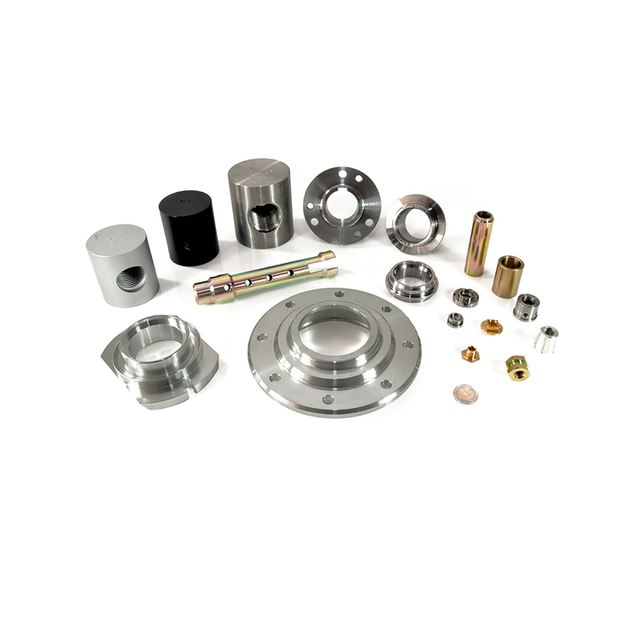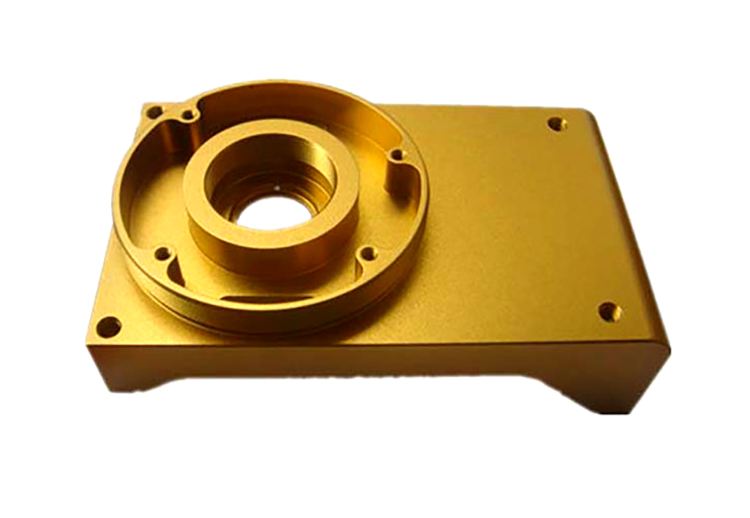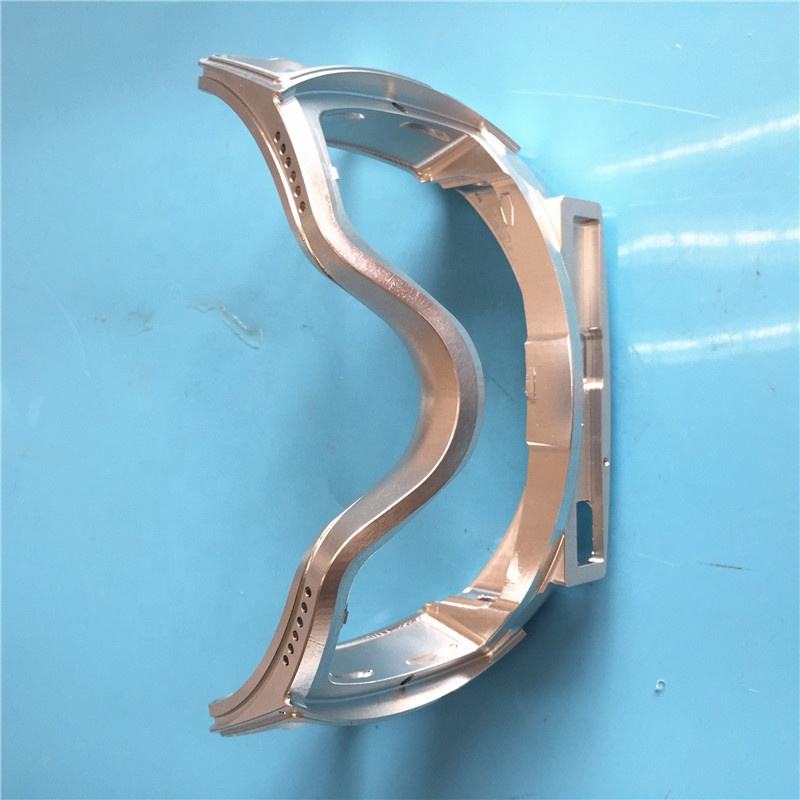
China’s CNC machining industry is not just about high volume; it’s increasingly about high complexity, precision, and efficiency. The adoption of multi-axis machines (5-axis and beyond) is a key strategy for Chinese manufacturers to move up the value chain, transitioning from “Made in China” to “Designed and Engineered in China.” These advanced machines are critical for producing complex components in competitive, high-tech sectors.
The “axes” refer to the number of directions in which the cutting tool or the workpiece can move. Standard 3-axis machines (X, Y, Z) are common, but adding rotational axes allows for machining incredibly complex geometries in a single setup.
Analysis of Application Scenarios
1. 6-Axis CNC Machining
- Technical Definition: Typically, this refers to a configuration that adds a sixth rotational axis to a standard 5-axis machine. A standard 5-axis machine has three linear axes (X, Y, Z) and two rotational axes (A and B, or A and C). The sixth axis is often another rotational axis on the workpiece fixture itself (e.g., a rotating chuck or tombstone), allowing it to spin 360 degrees.
- Application Scenarios in China:
- High-Volume, Complex Parts: The primary advantage is continuous machining. While one side of the fixture is being machined by the 5-axis head, the operator can load/unload a raw workpiece on the opposite side. The table then rotates 180 degrees to present the new part to the tool. This drastically reduces idle time.
- Automotive Sector: Mass production of complex engine blocks, cylinder heads, and transmission cases. Chinese manufacturers supplying to both domestic (e.g., Geely, BYD) and international OEMs use these for efficiency.
- Consumer Electronics: Machining high-precision, complex components like unibody smartphone chassis, laptop housings, and wearables in massive volumes with minimal cycle time.
- Key Driver in China: Throughput and Cost-Effectiveness. It’s less about geometric impossibility and more about achieving the economies of scale required for both domestic and global export markets.
2. 7-Axis CNC Machining
- Technical Definition: A 7-axis machine typically incorporates the movements of a 5-axis mill (3 linear + 2 rotational) with additional axes of movement. This is most commonly:
- The ability of the machining head to rotate around its own axis (an additional rotational axis).
- Or, a fully articulated robot arm (which itself has multiple axes) that handles the part, often in a “turn-mill” configuration.
- Application Scenarios in China:
- Ultra-Complex, Monolithic Components: Ideal for parts that would otherwise require multiple re-fixturings on a 5-axis machine. The extra articulation allows the tool to approach the workpiece from any angle, eliminating almost all dead zones.
- Aerospace and Defense: Manufacturing critical components like jet engine impellers, turbine blades, missile guidance system housings, and lightweight structural airframe components with intricate internal channels.
- Die & Mold Making: Producing highly complex injection molds with conformal cooling channels that follow the mold’s contour for faster cooling cycles. This is a huge market in China’s massive plastics industry.
- Medical Implants: Machining custom, patient-specific orthopedic implants (e.g., titanium skull plates, hip joints) that require flawless surface finishes and complex biocompatible geometries.
- Key Driver in China: Geometric Capability and Precision. This is for high-value components where design complexity outweighs pure volume concerns. It’s a technology adopted by top-tier Chinese factories serving advanced industries.
3. 8-Axis and 9-Axis CNC Machining
- Technical Definition: These are not standardized terms like 5-axis. They usually refer to highly integrated multitasking turn-mill centers.
- An 8-axis machine might combine a 4-axis lathe (2 linear + 2 rotational for turning) with a 4-axis milling unit, allowing simultaneous turning and milling operations.
- A 9-axis machine adds even more capability, perhaps a second milling spindle or additional rotational axes for the milling unit, enabling incredibly complex operations in one single clamping.
- Application Scenarios in China:
- “Done-in-One” Manufacturing: The ultimate goal is to complete a part from a raw bar stock to a finished product in one single machine setup. This includes turning, milling, drilling, tapping, grinding, and even inspection.
- Complex Shafts and Rotational Parts: Production of drive shafts, turbocharger shafts, and complex hydraulic components that require intricate milled features on a cylindrical turned body.
- Energy Sector: Manufacturing valves, fittings, and components for oil & gas and nuclear power plants, where absolute precision and material integrity are paramount.
- High-Precision Automotive Racing Components: For the niche market of producing drivetrain and engine components for motorsports and high-performance vehicles.
- Key Driver in China:Ultimate Process Integration and Quality Control. This is for the most demanding, high-value components where:
- Accuracy is critical: A single setup eliminates cumulative errors from multiple machine transfers.
- Lead time is critical: Completing a part in one machine drastically reduces total production time.
- Geometry is critical: It allows the machining of features that are simply not possible with separated turning and milling processes.
Summary Table
| Axis Count | Common Configuration | Primary Application in China | Key Chinese Industry Drivers |
|---|---|---|---|
| 6-Axis | 5-axis mill + 1 indexing rotary table | High-volume production with reduced idle time | Throughput & Cost: Mass production for automotive and electronics. |
| 7-Axis | 5-axis mill + additional articulated spindle or robot | Ultra-complex parts requiring impossible angles | Complexity & Precision: Aerospace, defense, medical implants, high-end molds. |
| 8/9-Axis | Integrated Turn-Mill Centers with multiple spindles | “Done-in-One” complete machining of rotational parts | Integration & Quality: High-value components in energy, precision automotive, and hydraulics. |
Conclusion
In China’s vast and layered manufacturing landscape, the adoption of these advanced axis is a clear indicator of a factory’s technological capability and target market.
- 6-axis is about scale and efficiency for complex parts.
- 7-axis is about pushing the boundaries of geometric design.
- 8/9-axis is about ultimate integration for the most critical and valuable rotational components.
The use of these machines is concentrated in China’s most advanced manufacturing hubs (like the Pearl River Delta and Yangtze River Delta) and is a cornerstone of the country’s strategy to dominate not only mass production but also the high-tech, high-precision manufacturing sectors of the future.