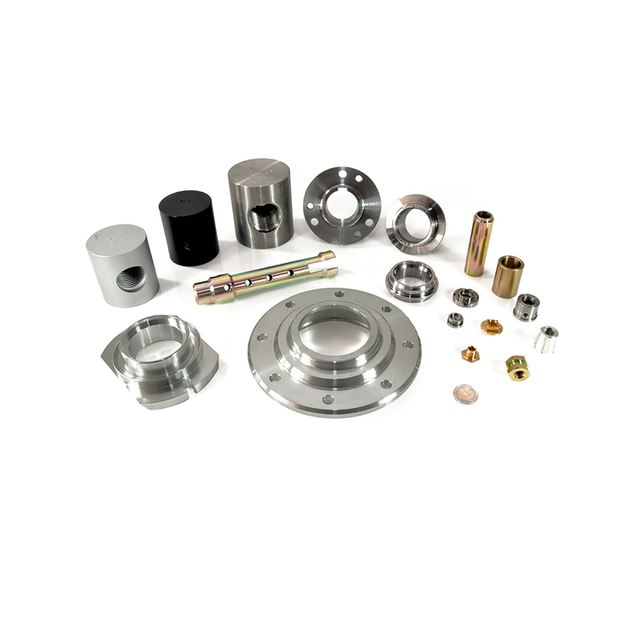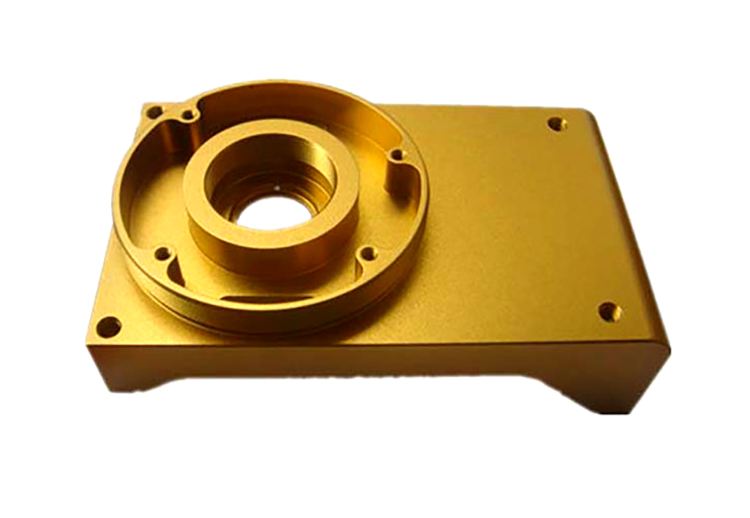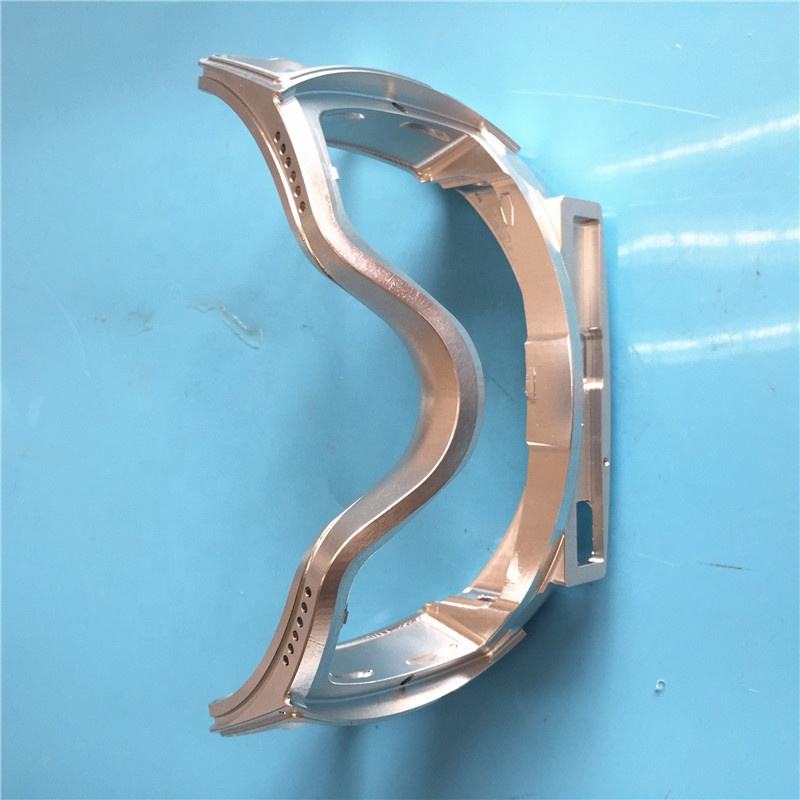
CNC (Computer Numerical Control) machining component is a subtractive manufacturing process where pre-programmed computer software dictates the movement of factory tools and machinery. The process can be applied to a wide variety of machines, each designed for specific operations.
Here are the primary machines used:
1. CNC Milling Machine
Primary Function: To remove material from a workpiece by rotating a cutting tool and moving it along multiple axes. It’s ideal for creating complex 3D shapes, slots, pockets, and holes.
Key Characteristics:
- Multi-Axis Capability: Ranges from 3-axis (X, Y, Z) to 5-axis or more, allowing for the creation of highly complex geometries without needing to reposition the workpiece.
- Versatility: Can machine a wide range of materials, including metals, plastics, and composites.
- Types: Common types include vertical machining centers (VMCs) and horizontal machining centers (HMCs). VMCs have a vertically oriented spindle, while HMCs are better for heavy, large parts and offer better chip evacuation.
- Applications: Creating engine blocks, molds, dies, and complex structural components.
2. CNC Turning Center (or CNC Lathe)
Primary Function: To create cylindrical parts by rotating the workpiece at high speed while a stationary cutting tool removes material.
Key Characteristics:
- Rotational Symmetry: Ideal for producing parts with radial symmetry, such as shafts, bolts, and pulleys.
- High Efficiency for Round Parts: Generally faster than milling for producing round features.
- Live Tooling: Advanced models, known as CNC Turning Centers or mill-turn centers, incorporate rotating tools, allowing for milling and drilling operations to be performed on the same machine without transferring the part. This drastically reduces cycle times and improves accuracy.
- Applications: Automotive axles, ball joints, connectors, and any rotational part.
3. CNC Swiss-Type Lathe (Swiss Screw Machine)
Primary Function: A specialized type of lathe designed for machining small, complex, and slender parts with high precision.
Key Characteristics:
- Guide Bushing: The workpiece is held tightly by a guide bushing very close to the cutting tools. This provides immense support, preventing deflection and allowing for extremely precise machining of long, thin parts.
- Multiple Tools: Swiss-type lathes have multiple tool stations that can operate simultaneously, significantly reducing cycle times for complex small parts.
- High Precision: Excels at producing parts with very tight tolerances, often used in the medical and electronics industries.
- Applications: Medical screws, pins, shafts, and electronic connectors.
4. CNC Electrical Discharge Machining (EDM)
Primary Function: To shape hard metals or create complex shapes by using electrical sparks (discharges) to erode material. It is ideal for materials that are difficult to machine with traditional methods.
Key Characteristics:
- Non-Contact Process: The tool (electrode) and workpiece do not make physical contact, eliminating mechanical stresses. This allows for machining very hard, brittle materials.
- High Accuracy and Fine Detail: Capable of producing intricate details, sharp internal corners, and very fine features that are impossible with milling.
- Two Main Types:
- Wire EDM: Uses a thin, charged wire to cut through the material like a precision bandsaw, ideal for making punches, dies, and stamps.
- Sinker EDM (Ram EDM): Uses a pre-shaped electrode to create a negative cavity or shape in the workpiece, perfect for mold cavities.
- Applications: Injection molds, extrusion dies, and aerospace components made from hardened tool steel or superalloys.
5. CNC Grinding Machine
Primary Function: To achieve very high surface quality and extremely tight dimensional tolerances using a rotating abrasive wheel.
Key Characteristics:
- Ultra-High Precision and Finish: Used as a finishing process to achieve tolerances in the microns and superior surface finishes.
- Material Hardness: Effective for grinding very hard materials like hardened steel, ceramics, and carbides.
- Types: Includes surface grinders, cylindrical grinders, and centerless grinders, each suited for different part geometries.
- Applications: Bearing races, cutting tools, precision shafts, and any component requiring a perfect finish and exact dimensions.
6. CNC Drilling and Tapping Machine
Primary Function: A specialized machine primarily focused on creating and threading holes.
Key Characteristics:
- High Speed and Efficiency: Optimized for rapid, accurate drilling and tapping operations. Often features a multi-spindle head to drill multiple holes simultaneously.
- Dedicated Function: While milling machines can drill, dedicated drilling machines are faster and more cost-effective for parts that consist mainly of holes.
- Applications: Engine blocks, gearbox housings, and metal plates with bolt hole patterns.
Summary
| Machine Type | Primary Function | Key Characteristics |
|---|---|---|
| CNC Milling Machine | Creating complex 3D shapes, pockets, slots. | Multi-axis, highly versatile, for complex parts. |
| CNC Turning Center | Producing cylindrical, rotationally symmetric parts. | High efficiency for round parts, often with live tooling. |
| CNC Swiss-Type Lathe | Machining small, slender, high-precision parts. | Guide bushing for support, multiple simultaneous tools. |
| CNC EDM | Machining hard metals with intricate details. | Non-contact process, high accuracy for hard materials. |
| CNC Grinding Machine | Achieving ultra-high precision and surface finish. | Finishing process, works on very hard materials. |
| CNC Drilling Machine | Efficiently creating and threading holes. | High-speed, dedicated to hole-making operations. |
In modern workshops, these machines are often used in combination. A part might be roughed out on a milling machine, finished on a lathe, and then have critical features finalized with EDM or grinding to achieve the final required specifications.