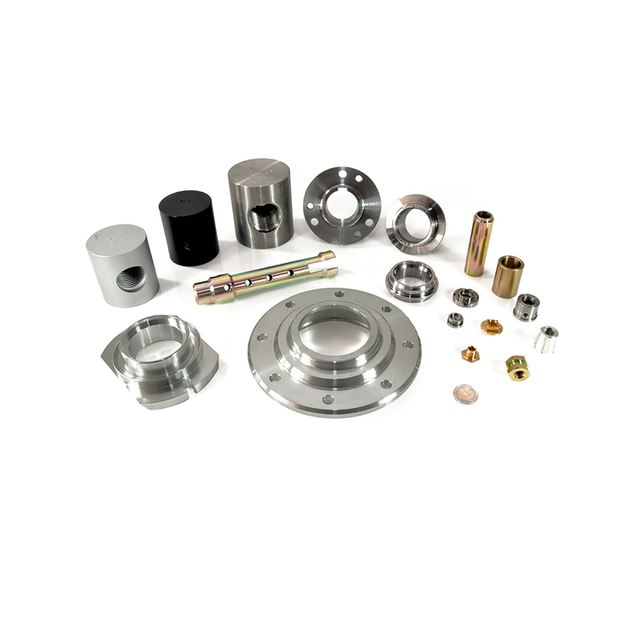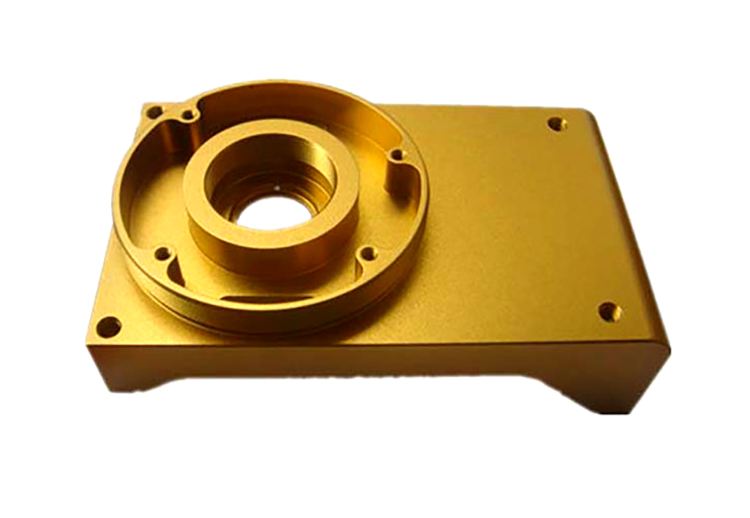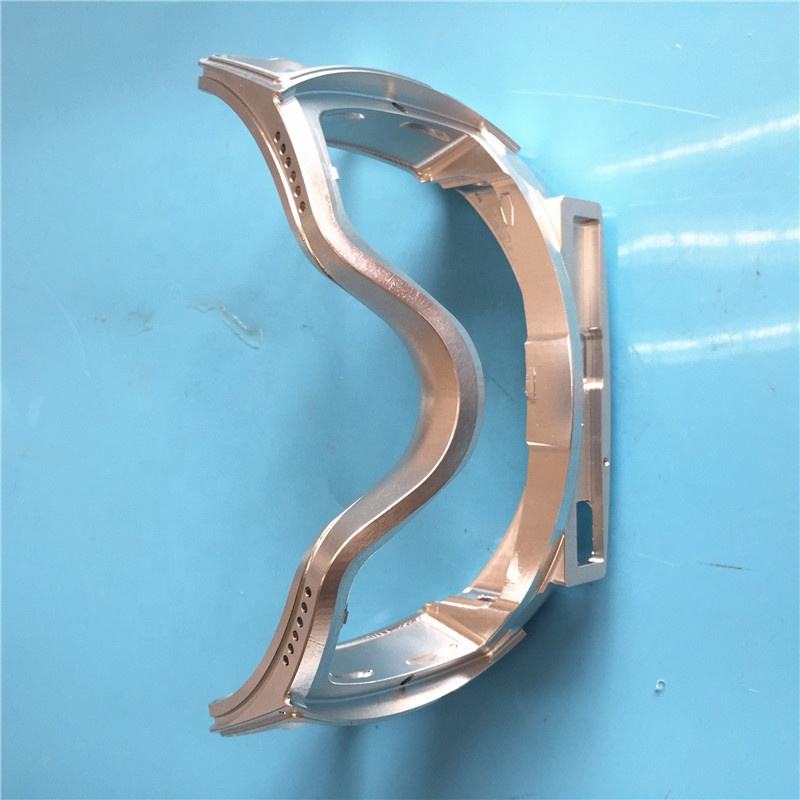
When designing parts for CNC machining, incorporating features that simplify the manufacturing process is key to reducing both time and cost. This philosophy is often called Design for Manufacturability (DFM).
Here’s a breakdown of key features and strategies to achieve this:
1. Optimize Internal Corners: Use Radii, Not Sharp 90° Angles
CNC cutting tools are cylindrical, so they cannot create sharp internal corners.
- Problem: A designer specifies a sharp 90° internal corner. The machinist must use a smaller tool to get into the corner, which requires multiple, slower passes and increases the risk of tool breakage.
- Solution: Specify a radius for all internal corners. A good rule of thumb is to use a standard end mill size (e.g., 0.125″, 0.25″, 0.5″). Using a single, larger tool for the entire operation drastically reduces machining time.
2. Limit the Depth of Cavities and Pockets
Deep pockets require a lot of material removal, which is time-consuming and hard on tools.
- Problem: Designing a pocket with a depth more than 4-6 times the tool diameter. This requires specialized long-reach tools that are prone to deflection (vibrating), leading to slower speeds, poor surface finish, and potential inaccuracies.
- Solution: Keep pocket depths as shallow as functionally possible. If a deep cavity is necessary, consider designing it with a stepped profile or incorporating draft angles on the walls.
3. Maximize the Size of Internal Corner Radii
This is related to point 1 but is so important it deserves emphasis.
- Problem: A small radius (e.g., 0.01″) forces the use of a very small, fragile tool, slowing down the process significantly.
- Solution: Use the largest possible internal radius your design allows. A larger radius allows for a larger, stronger tool that can remove material much faster and more reliably.
4. Avoid Complex and Hard-to-Machine Geometries
Some shapes are inherently expensive to machine.
- Problem: Designing deep, narrow slots; thin walls; or complex 3D surfaces. These require very small tools, multiple tool changes, and long machining times (especially for 3D surfaces).
- Solution:
- Slots: Make slots at least as wide as the depth, or wider.
- Walls: Avoid very thin walls (<1mm / 0.04″) as they can vibrate or break during machining.
- Complex Surfaces: Simplify curved surfaces where possible. Use fillets and chamfers instead of complex free-form shapes.
5. Standardize Hole Sizes and Threads
Tool changes take time. Every unique hole size or thread type requires a different tool.
- Problem: Using a variety of non-standard hole sizes and custom thread pitches.
- Solution: Use standard drill and tap sizes. Stick to common metric or imperial sizes. This minimizes the number of tool changes and allows the machinist to use readily available tools.
6. Design with Standard Drill Angles
The tip of a drilled hole is not flat; it has a standard 118° or 135° point angle.
- Problem: Specifying a flat-bottomed blind hole. This requires an additional, time-consuming operation with a special tool.
- Solution: Allow for a standard drill point angle at the bottom of blind holes. If a flat bottom is critical, understand that it will add cost.
7. Increase Tolerances and Surface Finish Requirements Only Where Critical
Tight tolerances and fine surface finishes are major cost drivers.
- Problem: Applying a general tight tolerance (e.g., ±0.025mm) or a very fine surface finish (e.g., 0.2µm Ra) to the entire part.
- Solution: Apply tight tolerances and fine finishes only to critical features. For non-critical features, use standard, looser tolerances (e.g., ±0.1mm or ±0.005″). A standard “as-machined” finish is usually sufficient and avoids the cost of secondary finishing like polishing.
8. Choose the Right Material
Material choice directly impacts machining time and tool wear.
- Problem: Specifying an exotic or very hard material (e.g., titanium, hardened steel) when it’s not functionally necessary.
- Solution: Choose the most machinable material that meets the part’s functional requirements. Aluminum (especially 6061) is generally the fastest and cheapest to machine. Plastics like Delrin (POM) are also excellent.
Summary of Key Methods to Reduce Time and Cost:
- Design for Larger Tools: Use generous radii and avoid deep, narrow features.
- Simplify Geometry: Reduce complex curves, undercuts, and thin walls.
- Standardize Features: Use common hole sizes, threads, and fillets.
- Optimize Tolerances and Finishes: Only specify tight controls where absolutely needed.
- Select Machinable Materials: Choose aluminum or easy-to-machine plastics over harder alloys when possible.
- Communicate Early: Discuss the design with the machinist before finalizing it. They can provide valuable DFM feedback.
By incorporating these principles into the design phase, you create a part that is not only functional but also efficient and economical to produce via CNC machining.