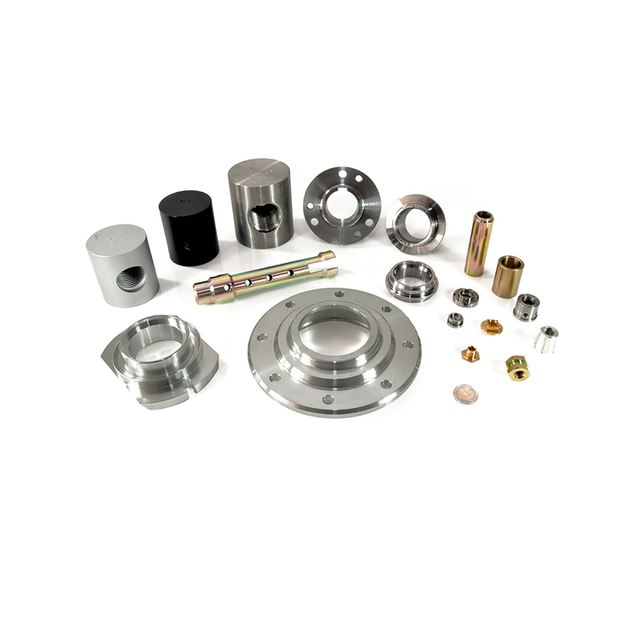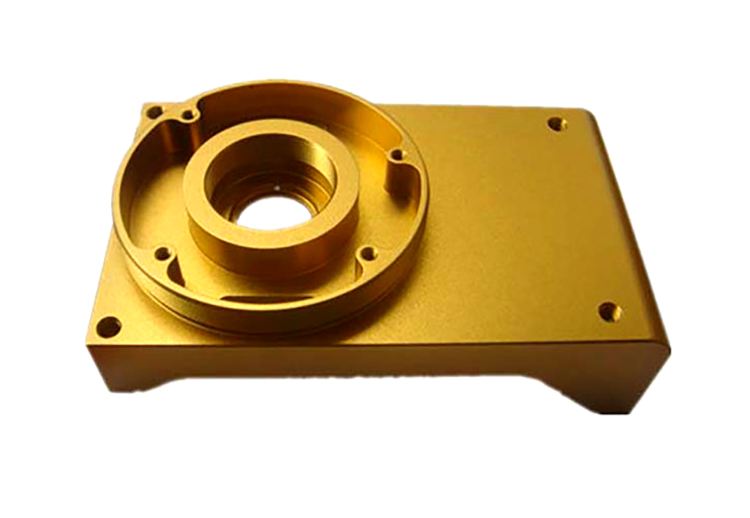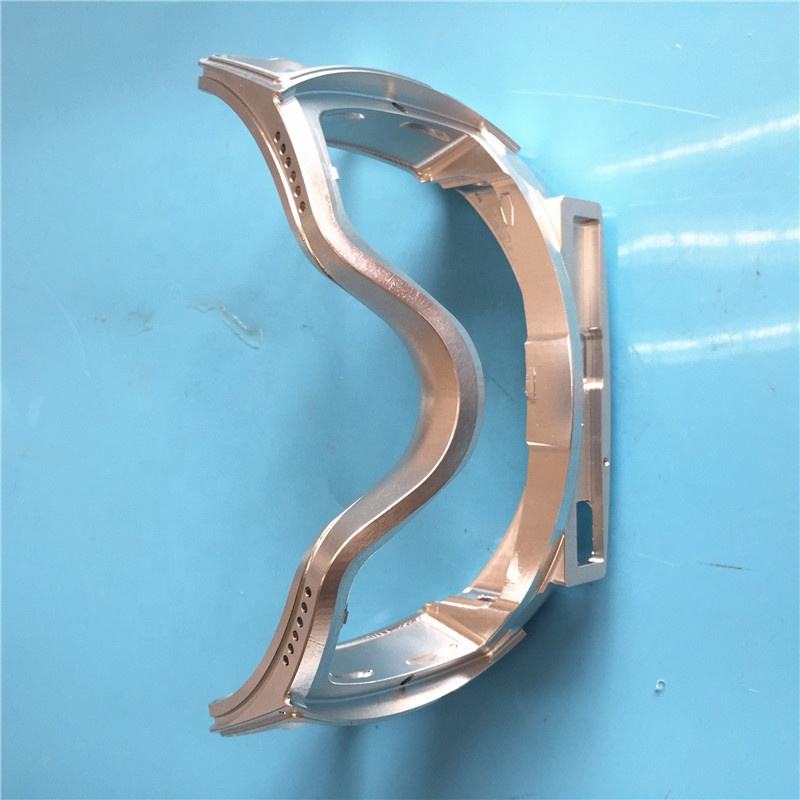
CNC (Computer Numerical Control) Machining is a subtractive manufacturing process where pre-made blocks of material (blanks) are shaped into a final part by removing material with precision cutting tools. It is the technological opposite of 3D printing (additive manufacturing) and is a cornerstone of professional automotive modification for creating high-strength, precision, and durable parts.
Commonly Used CNC Machining Methods
1. CNC Milling
- How it works: A rotating multi-point cutting tool moves along multiple axes (3, 4, or 5) to remove material from a stationary workpiece.
- Common Uses:
- Engine Components: Custom intake manifolds, throttle bodies, cylinder head porting and milling, valve covers, brackets, and pulleys.
- Drivetrain: Differential covers, transmission components, shifters.
- Suspension & Brakes: Custom control arms, brake caliper brackets, pedal boxes.
- Interior: Precision-machined aluminum dash panels, knobs, and accents.
2. CNC Turning (Lathe Work)
- How it works: A stationary cutting tool removes material from a workpiece that is rotating at high speed. Used for creating cylindrical or conical parts.
- Common Uses:
- Engine Components: Pistons, valves, camshafts, turbocharger shafts, spacers, and bushings.
- Wheels & Hubs: Custom wheel spacers, lug nuts, hub adapters.
- Miscellaneous: Shift knobs, roll cage bolts, fluid fittings.
3. CNC Drilling & Tapping
- How it works: Often performed as part of a milling or turning process, it involves creating precise holes and threading them.
- Common Uses: Creating precision bolt patterns for engine mounts, fabricating flanges for exhaust systems, and any part requiring accurate fastener holes.
Common Materials and Their Cost-Effectiveness
The choice of material is critical and balances performance, machinability, and cost.
| Material | Cost-Effectiveness | Common Applications in Auto Modding |
|---|---|---|
| Aluminum (e.g., 6061, 7075) | Very High. The best balance of cost, weight, strength, and machinability. Readily available and relatively easy to machine, reducing labor time. | Intake manifolds, valve covers, brackets, pulleys, interior trim, heat shields. |
| Steel (Mild & Stainless) | High (Mild), Moderate (Stainless). Mild steel is inexpensive and strong but heavy and can rust. Stainless (e.g., 304, 316) is more expensive and harder to machine but offers corrosion resistance. | Motor mounts, suspension components (arms, brackets), exhaust flanges, custom fittings. |
| Titanium (e.g., Grade 5) | Low. Very expensive material and challenging to machine (requires slow speeds, specialized tools). Justified only where its exceptional strength-to-weight ratio and heat resistance are critical. | High-performance valvetrain components (valves, springs), turbocharger parts, connecting rods, exotic suspension bolts. |
| Plastics (e.g., Delrin, Nylon) | Moderate to High. cheaper than metals and easy to machine. Excellent for low-friction and insulating applications. Not suitable for high-stress or high-heat environments. | Bushings, spacers, shims, interior components, mock-up prototypes. |
Advantages & Disadvantages
| Advantage | Description |
|---|---|
| Unmatched Precision & Tolerances | CNC machining can hold extremely tight tolerances (±0.025mm or better), which is critical for engine internals, bearing fits, and any part requiring perfect alignment. |
| Superior Material Properties | Parts are made from solid blocks of high-grade, dense material. They are isotropic (equally strong in all directions) and have mechanical properties far superior to most 3D-printed parts. |
| Excellent Surface Finish | CNC machining can achieve near-mirror finishes directly off the machine. This reduces post-processing time and is ideal for visible components. |
| Material Versatility | Can machine a vast range of materials, from soft plastics to super-alloys, allowing properties to be perfectly matched to the application (heat, stress, corrosion). |
| Ideal for High-Volume Production | While setup is expensive, once programmed and fixtured, CNC can produce identical parts very efficiently, making it cost-effective for medium-volume production runs. |
| Disadvantage | Description |
|---|---|
| High Startup Cost & Setup Time | Creating the CNC program (CAD/CAM) and setting up the machine with fixtures and tools is time-consuming and expensive. This makes it cost-ineffective for a single prototype. |
| Material Waste | Being a subtractive process, it can generate significant waste material (chips, swarf), which adds to the cost, especially with expensive metals like titanium. |
| Design Limitations | CNC tools cannot easily create internal channels or extremely complex, organic geometries as easily as 3D printing can. Designs are often limited by the tool’s access to the material. |
| Higher Cost for Complexity | The more complex a part’s geometry, the more machine time, tool changes, and setups are required, driving the cost up significantly. A simple bracket is cheap; a complex intake manifold is not. |
| Requires Expert Operators | Programming and operating a CNC machine requires highly skilled technicians, adding to the operational cost. |
Conclusion
For an automotive modification shop, CNC machining is the go-to process for creating final, functional, and high-performance components. It is not typically used for early-stage prototyping (where 3D printing shines) but rather for manufacturing the end-use product. Its value is in its precision, strength, and durability.
The性价比 (cost-effectiveness) is excellent for:
- Parts where failure is not an option (engine, drivetrain, brakes, suspension).
- Medium-volume production (e.g., a batch of 50 intake manifolds).
- Parts requiring specific material properties that 3D printing cannot provide.
In a modern workshop, CNC machining and 3D printing are complementary: a shop might 3D print a prototype to test fit and function and then use CNC machining to produce the final part in aluminum or steel.