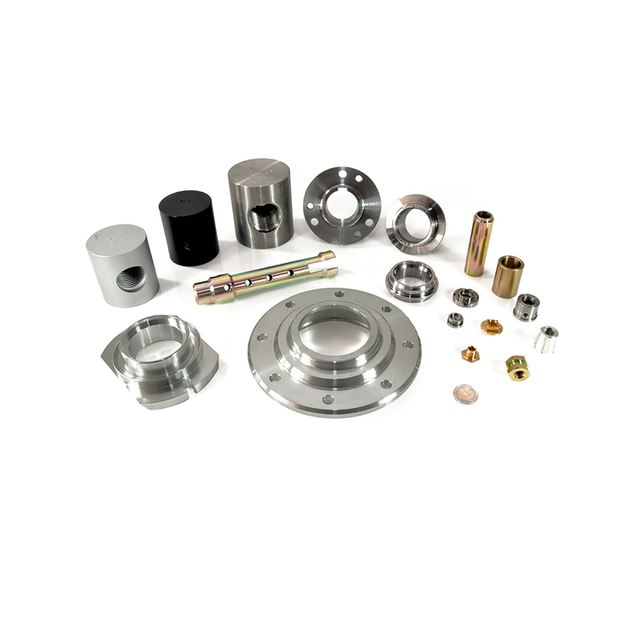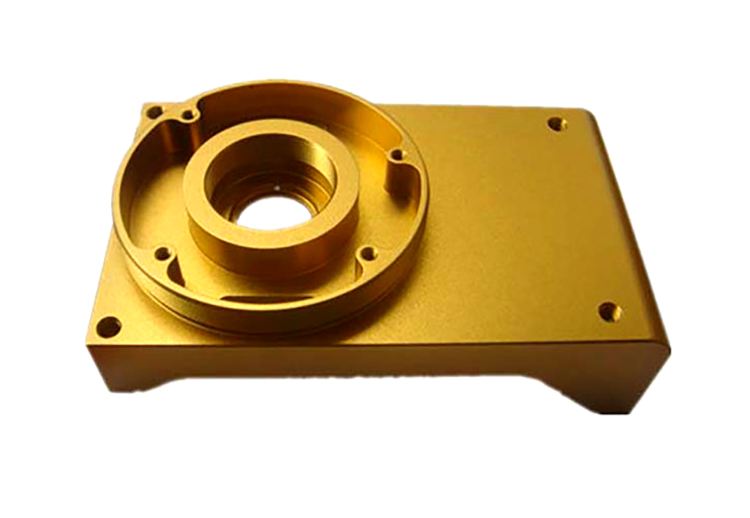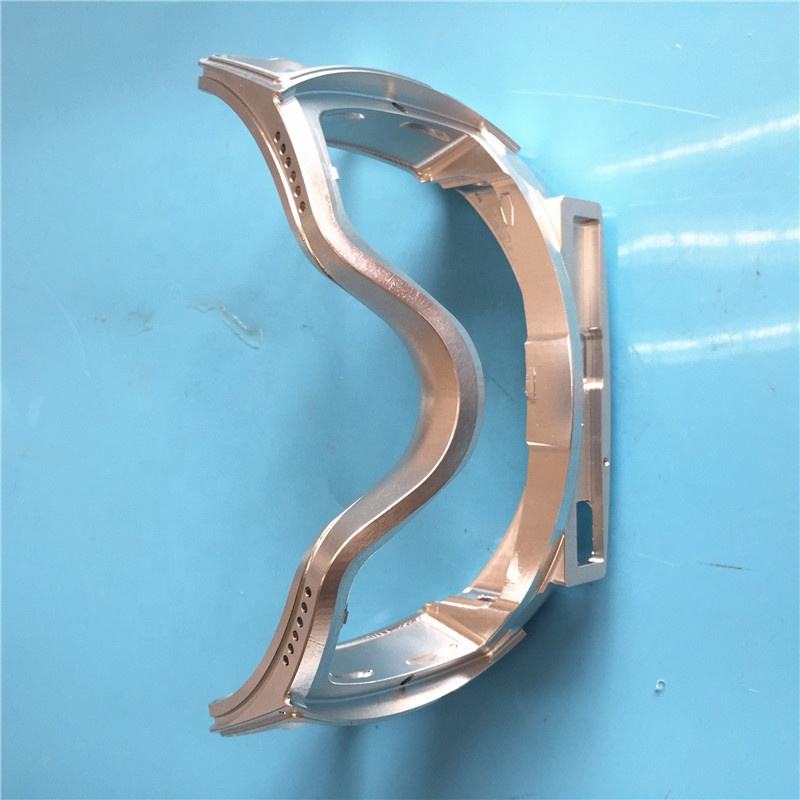
At its core, CNC machining is a subtractive manufacturing process where a rotating cutting tool removes material from a solid block. The number of “axes” refers to the number of directions in which the cutting tool or the workpiece can move. Adding axes increases the machine’s capabilities and complexity.
1. 3-Axis CNC Machining
How it Works:
The cutting tool can move in three linear directions:
- X-axis: Left to Right
- Y-axis: Front to Back
- Z-axis: Up and Down
The workpiece is fixed in a single position.
Typical Use Cases:
- Milling 2.5D Geometry: Creating features like pockets, holes, slots, and profiles on the top and sides of a part.
- Face Milling: Creating a flat surface.
- Drilling and Tapping: Creating holes with threaded inserts.
- Common Applications: Manufacturing simple, non-complex parts like brackets, plates, gears, and molds with shallow cavities.
Key Advantages:
- Widely Available: The most common and affordable type of CNC machine.
- Simple Programming: Easier to program and operate.
- Excellent Accuracy: Highly accurate for parts that fit within its capabilities.
Limitation:
- Requires Multiple Setups: To machine all sides of a part, an operator must stop the machine, manually re-position the workpiece, and re-zero the coordinates. This introduces the potential for human error and misalignment.
2. 4-Axis CNC Machining
How it Works:
A 4-axis machine has the same three linear movements as a 3-axis machine, but adds one rotational axis, typically referred to as the A-axis. This means the workpiece can now rotate (usually around the X-axis) while the tool is cutting.
Typical Use Cases:
- Cylindrical Machining: Engraving, cutting holes, or carving contours around a cylinder (e.g., camshafts, custom shafts).
- Indexing: The machine rotates the part to a precise angle, holds it stationary, and then uses 3-axis movements to machine it. This is perfect for cutting features on multiple sides of a part in a single setup.
- Continuous Machining: The tool can cut while the workpiece is rotating, enabling the creation of complex curves like those found in propellers or custom manifolds.
Key Advantages:
- Single Setup: Ability to machine multiple sides of a part without manual repositioning, improving accuracy and reducing setup time.
- Complex Geometries: Can produce more complex parts than 3-axis machining.
- Efficiency: Dramatically faster for parts that require features around a circumference.
3. 5-Axis CNC Machining
How it Works:
A 5-axis machine adds two rotational axes to the three linear axes. The two rotational axes are typically referred to as the A-axis (rotation around X) and the C-axis (rotation around Z), though nomenclature can vary. This allows the cutting tool to approach the workpiece from any direction in a single setup.
There are two main configurations:
- Trunnion Style: The rotational axes are in the table, which tilts and rotates the workpiece.
- Swivel-Head Style: The rotational axes are in the spindle head, which tilts and rotates the tool.
Typical Use Cases:
- Highly Complex Contours: Manufacturing parts with intricate, organic shapes (e.g., aerospace structures, turbine blades, impellers, medical prosthetics, and complex molds).
- Machining Angles: Creating features on any of the five exposed sides of a part without changing the setup.
- Working in Tight Spaces: The ability to tilt the tool allows for machining deep cavities and undercuts that would be impossible with a shorter, vertical tool.
Key Advantages:
- Ultimate Single Setup: Machines virtually all sides of a part (except the bottom) in one clamping, ensuring exceptional dimensional accuracy and eliminating misalignment errors.
- Superior Surface Finish: The ability to keep the cutting tool perpendicular to the surface being machined leads to a higher-quality finish.
- Faster Material Removal: Allows the use of shorter cutting tools (reducing vibration) and enables optimal cutting positions, which permits higher feed rates.
Limitation:
- High Cost: Significantly more expensive to purchase, program, and operate.
Summary Table: Key Differences
| Feature | 3-Axis | 4-Axis | 5-Axis |
|---|---|---|---|
| Movements | 3 Linear (X, Y, Z) | 3 Linear + 1 Rotational | 3 Linear + 2 Rotational |
| Complexity | Low | Medium | High |
| Cost | Low | Medium | High |
| Setups Required | Multiple for complex parts | Reduced | Single setup for most parts |
| Precision | High (but risk from multiple setups) | Higher | Highest (single setup) |
| Ideal For | Simple parts, 2.5D geometry, prototyping | Cylindrical parts, indexed features | Complex, organic shapes, aerospace, medical |
In short: Choose the CNC machining process based on the part’s complexity. Use 3-axis for simplicity and cost, 4-axis for cylindrical or indexed parts, and 5-axis for the most complex, high-precision components.